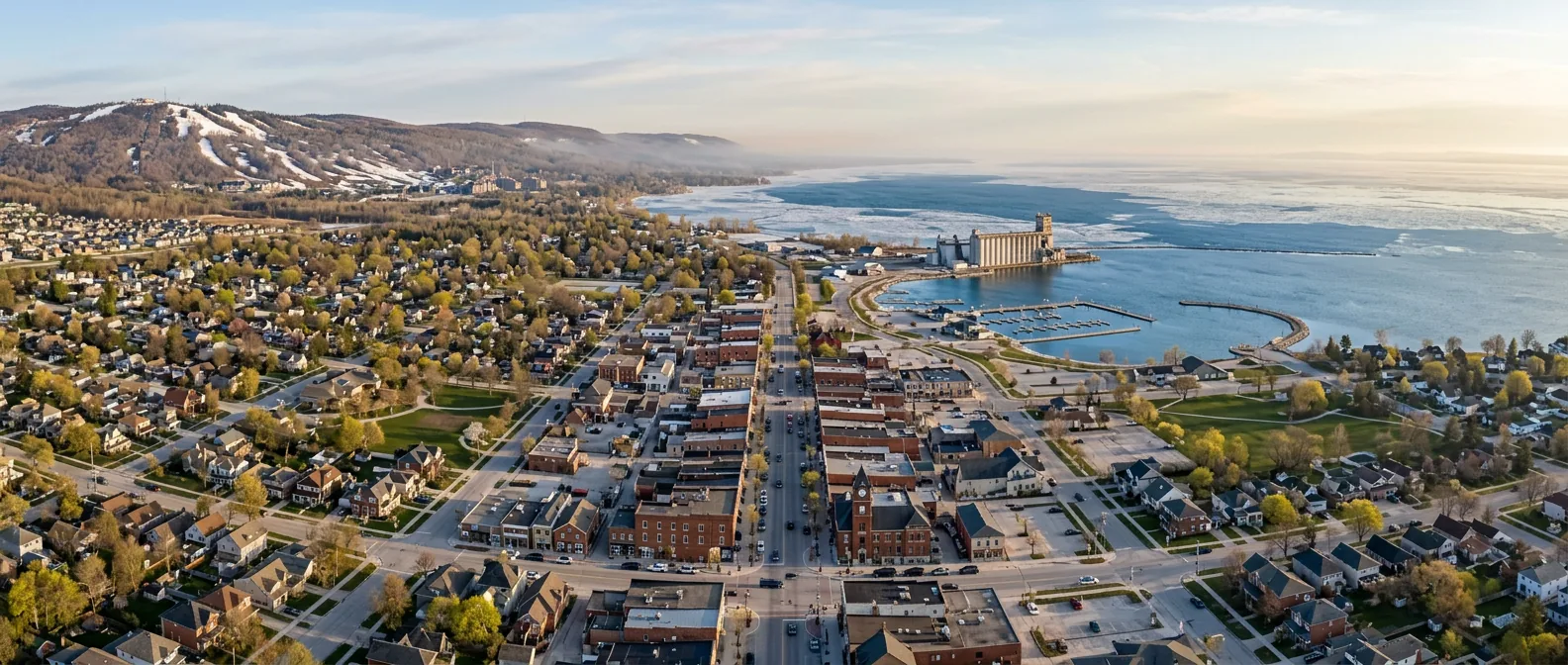
Collingwood Neighbourhood Guide 2026
If you're moving to Collingwood, the wrong neighbourhood choice can cost you more than money. It can cost you time, daily friction, and long-term lifestyle fit.
The right neighbourhood makes your week easier. School mornings are smoother. Weekend traffic is less painful. Commutes and errands feel predictable.
This guide gives you a practical, area-by-area view of Collingwood in 2026. It is built for GTA movers, local move-up buyers, and second-home households who want clarity before making offers. For a buyer-first search model after reading, see Real Estate Ready.
Quick Answer: Which Collingwood Area Is Best?
There is no single best neighbourhood. The right choice depends on how you actually live.
- Want walkability and local energy? Start with Downtown Core
- Need family routine and school access? Start with Mountain View / Spruce
- Want low-maintenance waterfront proximity? Start with Harbourview / Waterfront
- Want quieter value pockets? Start with Cranberry / Pretty River
- Buying for ski and recreation priority? Start with Blue Mountain / The Blue Mountains
- Want larger lots and village pace? Start with Thornbury / Meaford corridor
Then build your criteria before tours with the buyer wishlist.
Collingwood by the Numbers (Context for 2026)
- The market remains seasonal, with spring and fall listing activity still leading annual flow.
- Buyer demand from the GTA continues, especially from Toronto, York, Peel, and Durham households looking for lifestyle relocation.
- Collingwood has high home-type diversity in a compact area: heritage homes, detached subdivisions, waterfront condos, townhomes, and resort inventory.
- Highway 26 remains the daily-life spine between downtown, waterfront, and Blue Mountain, so traffic timing matters as much as map distance.
Translation: two homes with similar list prices can produce very different day-to-day experiences depending on the street and micro-area.
Area-by-Area Breakdown
1) Downtown Core

Best for
- Walkability-first buyers
- Downsizers and couples
- Buyers who want restaurants, shops, and events nearby
Typical housing profile
- Heritage homes on streets like Pine, Huron, and Ste. Marie
- Renovated in-town detached stock
- Smaller condo and townhouse inventory in select pockets
Daily life
Downtown offers the strongest "park the car" lifestyle in Collingwood. Huron Street and side streets around it hold most of the town's everyday energy, from coffee stops to festivals and evening dining. Toronto-to-downtown Collingwood drive time is typically about 90 to 110 minutes in normal conditions. In early 2026, many detached homes in true walkable pockets traded roughly between $750K and $1.1M, with smaller condos often starting around the mid-$400Ks.
Tradeoffs
- Premium pricing on genuinely walkable blocks
- Smaller lots, tighter driveways, and less storage flexibility
- Noticeable summer and long-weekend traffic and parking pressure
Buy here if...
You value convenience, character, and local atmosphere more than lot size.
2) Mountain View / Spruce Street Area
Best for
- Families focused on school and routine
- Buyers who want practical detached layouts
- GTA households that prefer suburban flow over tourism energy
Typical housing profile
- Detached homes from mid-age and newer subdivisions
- 3- to 4-bedroom layouts with garages and office potential
- Streets near Mountain View Drive and Spruce Street with consistent family stock
Daily life
This is one of Collingwood's most routine-friendly zones. Mornings are school, parks, and errands, not restaurant traffic or weekend visitor overflow. It feels familiar to buyers coming from suburban GTA neighborhoods, but with much stronger recreation access nearby. In early 2026, many detached homes in this pocket sat roughly in the $650K to $900K range, depending on age, finish level, and lot depth.
Tradeoffs
- More car-dependent than downtown
- Strong competition for well-priced family homes
- Carrying costs vary by home size, age, and utility setup
Buy here if...
You want a dependable family base with function-first housing.
3) Harbourview / Waterfront
Best for
- Buyers who want bay adjacency
- Retirees and couples seeking lower maintenance
- Weekend owners transitioning to full-time living
Typical housing profile
- Waterfront-adjacent condos
- Townhomes near trail and marina access
- Limited detached inventory with location premium
Daily life
The major draw here is easy access to the waterfront trail, marina area, and open bay views. For many buyers, this is the easiest way to get a daily outdoor lifestyle without managing a large lot. Drive time from much of the GTA is similar to downtown Collingwood, usually around 90 to 110 minutes depending on departure time. In 2026, many condos in this zone were in the $450K to $750K+ range, with premium view units above that.
Tradeoffs
- Condo fees can materially change monthly affordability
- Building rules and rental policies vary by complex
- View-facing units carry strong pricing premiums
Buy here if...
You want low-maintenance ownership close to the bay and trails.
4) Cranberry / Pretty River
Best for
- Buyers seeking value relative to core and waterfront premiums
- Retirees and quieter-lifestyle households
- Buyers wanting established communities with practical access
Typical housing profile
- Mixed detached and townhome inventory
- Golf-adjacent communities around Cranberry
- Mature pockets with varied lot sizes and streetscapes
Daily life
Cranberry and Pretty River usually feel calmer than resort-adjacent areas while still giving good access to shopping and services. The area sits close enough to Collingwood essentials, but avoids much of the downtown intensity. Buyers coming from the GTA should expect similar total drive time to Collingwood, with local positioning affecting day-to-day convenience more than city-to-town commute time. In early 2026, many detached homes in this broader pocket traded around $600K to $850K, often with stronger space value than central locations.
Tradeoffs
- Home style and condition can vary significantly street to street
- Some communities have association fees and rules
- Resale performance differs across micro-pockets
Buy here if...
You want balanced access, quieter streets, and better space-per-dollar.
5) Blue Mountain / The Blue Mountains Municipality
Best for
- Four-season recreation buyers
- Ski-first households
- Buyers assessing second-home flexibility
Typical housing profile
- Resort condos in and around Blue Mountain Village
- Chalet and chalet-style detached options
- Lifestyle properties in pockets like Craigleith and Lora Bay
Daily life
This area is built around seasonality and activity. Winter weekends and holiday periods bring heavy visitor volume, while shoulder seasons can feel much quieter. Toronto-to-Blue Mountain travel is often 90 to 120 minutes depending on origin and traffic, and Highway 26 bottlenecks can add meaningful delay on peak days. In early 2026, resort condos often ranged from roughly $400K to $750K+, while detached lifestyle inventory in premium pockets commonly sat above $1M.
Tradeoffs
- Peak-season traffic materially affects errands and local movement
- Rental and occupancy rules vary across zones and buildings
- BMVA and related fees can raise all-in monthly costs
Buy here if...
You are prioritizing recreation access and can tolerate seasonal intensity.
6) Thornbury / Meaford Corridor
Best for
- Buyers who want larger lots or quieter village rhythm
- Move-up and pre-retirement households
- Buyers prioritizing scenery and long-horizon lifestyle fit
Typical housing profile
- Detached homes with more land than central Collingwood options
- Village-core and waterfront-adjacent premium homes in Thornbury
- Mix of heritage and newer custom homes along Grey Road 2 corridor
Daily life
Thornbury is about 15 to 20 minutes west of Collingwood, and Meaford is farther along the same corridor. You get a slower pace, strong bay-town feel, and amenities centered around village main streets and harbour access. For GTA commuters, the total trip is often 20 to 30 minutes longer than Collingwood proper, which matters if you still travel south regularly. In early 2026, many detached homes in Thornbury ranged roughly from $700K to $1.2M, with prime waterfront or custom stock above that.
Tradeoffs
- Longer drives to some schools, services, and Collingwood routines
- Premium pricing in prime village pockets
- Lower listing volume in certain micro-markets
Buy here if...
You are willing to trade convenience for space, calm, and village cadence.
How to Compare Collingwood Neighbourhoods: A Buyer's Framework
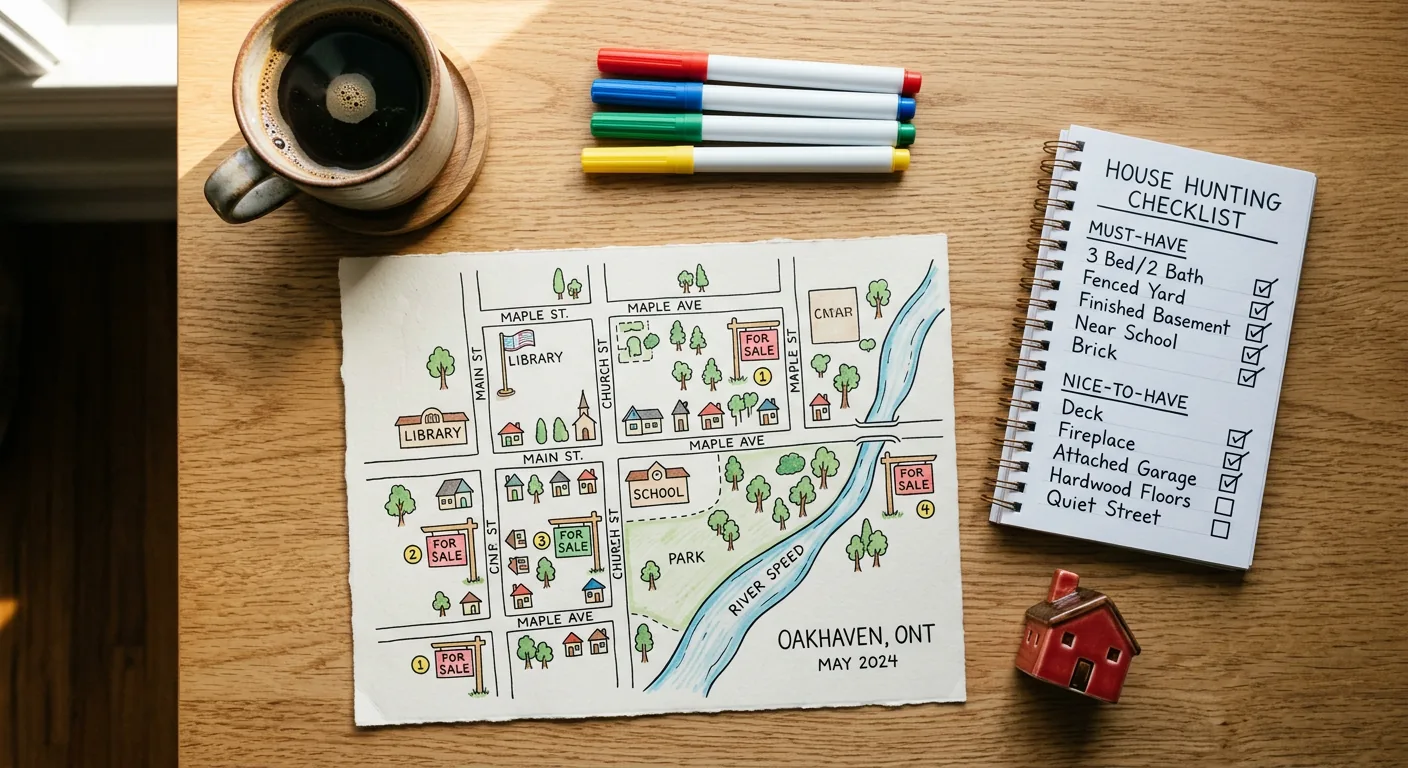
Most buyers compare neighborhoods with emotion first and structure second. That sequence creates expensive mistakes.
Use this framework before contacting agents.
1) Separate must-haves from nice-to-haves
Create two clear lists:
- Must-haves: if missing, you should not buy
- Nice-to-haves: valuable, but optional
Examples of must-haves: school boundary, internet reliability, budget ceiling, commute limit, true home office space. Examples of nice-to-haves: water view, walkable coffee, certain finish style.
This one step prevents overpaying for features that feel exciting but do not improve your week-to-week life.
2) Apply the 3-visit rule
Visit your top areas three times before making an offer:
- Weekday morning (traffic and school rhythm)
- Weekend afternoon (parking, foot traffic, event pressure)
- Evening or off-season window (noise, winter feel, lighting, pace)
A single sunny weekend visit gives a distorted picture. Three visits usually reveal the real fit.
3) Build your buyer wishlist before agent outreach
If you approach agents without clear criteria, your search gets shaped by available inventory instead of your goals. Write your price ceiling, timeline, non-negotiables, and location constraints first.
Then submit your criteria through the buyer wishlist. This improves match quality and helps local agents respond to your needs with less noise.
What GTA Buyers Get Wrong About Collingwood Neighbourhoods

1) Assuming downtown always means best value
Downtown Collingwood offers strong walkability and energy, but it is not automatically the best value option. In many cases, Mountain View and Cranberry deliver more interior space and easier monthly carrying costs for similar budgets.
2) Underestimating seasonal traffic impact
Highway 26 can materially change daily life in winter and summer peaks. A 12-minute map drive can become 35 minutes on ski weekends. Buyers should test routes during realistic high-traffic windows before they commit.
3) Skipping internet and utility due diligence
Address-level service availability matters more than area-level assumptions. Confirm provider options, speed tiers, and reliability before closing. Also check heating type, water source, and cell coverage where applicable.
4) Underestimating condo and association carrying costs
Condo fees, reserve fund realities, and potential assessments can shift affordability fast. BMVA and related fees in resort zones can have the same effect. Always model full monthly cost, not just mortgage payment.
5) Over-indexing on ski proximity
Being near skiing matters for frequent users, but many buyers overpay for proximity they use less than expected. A property that performs better year-round can deliver stronger long-term satisfaction than one optimized for a few winter weekends.
Family Buyers: School and Commute Reality Check

Before writing offers, verify:
- Current school boundaries for your exact address
- French immersion eligibility and transportation policies
- Your real weekday commute pattern if you are hybrid
School-fit mistakes are one of the most expensive relocation errors because they are hard to fix after closing.
Remote Workers: What to Validate Before You Buy
- Confirm internet provider options at the exact civic address
- Test mobile signal and identify backup workspace options
- Check winter route reliability for occasional GTA travel
- Review utility setup and monthly cost assumptions
Do not treat "internet available in town" as enough due diligence.
A Practical Way to Narrow Your Search in 7 Days
Day 1-2: Define non-negotiables
- Budget ceiling
- Commute tolerance
- Required home type
- Timeline
Day 3-4: Tour top two neighbourhoods
Visit each area during weekday routine and weekend peak periods.
Day 5: Re-score with lived data
Drop one area if it misses your real daily criteria.
Day 6-7: Publish your buyer criteria
Submit your priorities through the buyer wishlist so opportunities can come to you based on fit.
Frequently Asked Questions
What is the best neighbourhood in Collingwood for families?
Mountain View/Spruce is often a first stop because of practical family layouts and routine flow. Cranberry/Pretty River is also worth comparing for value and quieter streets.
Is Downtown Collingwood a good place to buy?
Yes, for buyers prioritizing walkability and local energy. Expect smaller lots and premium pricing on the most walkable streets.
Which area is best for a second home near skiing?
Blue Mountain and The Blue Mountains are the default ski-first options. Review occupancy, rental, and fee rules before committing.
Where can I find better value in Collingwood?
Cranberry/Pretty River and selected Mountain View pockets often offer stronger space-per-dollar than downtown or resort zones.
Should I buy in Thornbury or Collingwood proper?
Choose Thornbury if you want village pace and more space. Choose Collingwood if you want tighter access to services, schools, and day-to-day convenience.
How do Collingwood costs compare with the GTA?
Purchase prices are often lower than core GTA comparables for similar home type. Full monthly carrying cost can narrow that advantage, especially with fees, utilities, and transportation.
Do I need a local agent for Collingwood?
Local expertise helps because micro-location differences are significant in this market. You will get better results if you build your criteria first, then engage agents with a clear brief.
What are common hidden costs buyers miss?
Condo fees, reserve fund risk, BMVA obligations, heating differences, and utility assumptions are the top misses. Always review full carrying-cost projections before offer day.
Is 2026 a good time to buy in Collingwood?
Inventory is more balanced than peak frenzy years, which gives buyers more room to evaluate fit. The right time is when your budget, timeline, and neighbourhood match are aligned.
Your Action Checklist Before You Buy

- Set a hard budget ceiling including carrying costs
- Confirm school boundaries for exact addresses
- Verify internet speeds at each shortlisted property
- Apply the 3-visit rule before shortlisting final areas
- Review status certificate and reserve fund for condos
- Ask about all condo/BMVA/association fees in writing
- Drive your likely routes during peak-season traffic
- Model utilities and heating costs by property type
- Submit your criteria at realestateready.ca
Ready to Find Your Fit?
Real Estate Ready is a demand-first platform for Collingwood buyers.
Instead of chasing listings, publish your wishlist and let matching opportunities come to you.
Submit your buyer wishlist now: realestateready.ca
Stop searching. Be found.
Published: March 13, 2026 | Learn more at Real Estate Ready.
Get your free Collingwood match report
Best-fit neighbourhoods, budget reality, and next steps — tailored to where and how you want to live.