Buying a Home in Collingwood Ontario: The Complete 2026 Guide
If you've been thinking about buying a home in Collingwood Ontario, 2026 is a more measured market than it's been in years. Prices have softened slightly from peak, inventory is moving at a considered pace, and disciplined buyers — the kind who show up prepared — are getting better outcomes than they would have in 2021 or 2022.
This guide covers everything you need to know before you make a move: what homes cost, what neighbourhoods to consider, which programs can save you money, and how the buying process actually works under Ontario's updated rules. Whether you're relocating from the GTA, looking for a seasonal property, or buying your first home anywhere, the Collingwood market has its own dynamics worth understanding before you start.
What Are Home Prices Like in Collingwood in 2026?
The average sold price in Collingwood as of February 2026 is approximately $767,093 — down about 2.9% year-to-date, but still up 6.5% year-over-year. That combination tells you something useful: the short-term has softened, but the longer-term trajectory is holding.
For context, the 10-year appreciation figure is +225.9%. The pandemic peak drove prices to unsustainable levels, and the correction since then has been gradual rather than sharp. We're not at a clearance-sale moment — but we're also not in a frenzied bidding environment.
What this means practically:
- Detached homes with outdoor space and proximity to trails or green space continue to outperform
- Move-in-ready properties command more than those needing significant work
- Condo units in resort-style developments can carry high maintenance fees — worth scrutinizing before you offer
- Waterfront versus waterfront access is a meaningful price distinction (more on that below)
163 new listings entered the market in the last 56 days as of this writing. That's moderate inventory — not a buyer's free-for-all, not a scarcity panic. Prepared buyers with financing confirmed are in a strong position.
Is Collingwood a Good Place to Buy a Home?
Short answer: yes, with the right expectations.
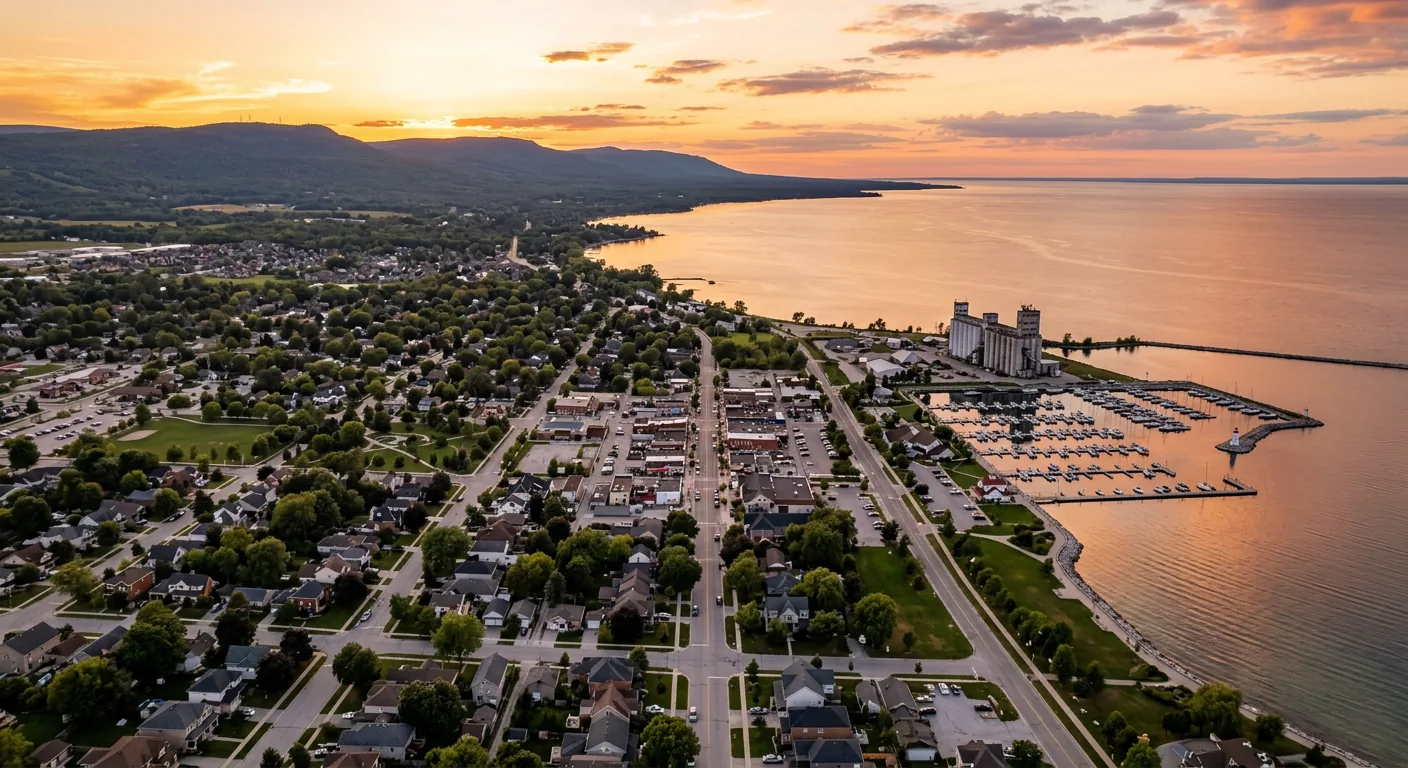
Collingwood sits between Georgian Bay and the Blue Mountains, about 90 minutes from Toronto. It's a genuinely four-season town — skiing and snowboarding in winter, hiking, cycling, and watersports in summer, a walkable downtown year-round. The population has grown steadily, and the business community has matured beyond a weekend destination into a viable place to live full-time.
The buyers who do well here typically fall into one of three profiles:
- GTA relocators who want space, lifestyle, and a lower price-per-square-foot than Toronto or Mississauga
- Recreational buyers who want a second property within reach of Blue Mountain or Georgian Bay
- Local and regional buyers who've been priced toward or past Collingwood from Barrie or Orangeville
The risks worth naming: Collingwood has seasonal demand spikes (ski season drives more competition), limited land supply that supports prices but can frustrate buyers who want specific configurations, and a short-term rental market with evolving zoning rules that can affect investor calculations.
If you're buying to live in or use the property — not to speculate — Collingwood's fundamentals are solid. See our Collingwood neighbourhood guide for a deeper breakdown of specific areas.
Collingwood Neighbourhoods Worth Knowing
Understanding the micro-markets inside Collingwood is as important as understanding the town-wide average.
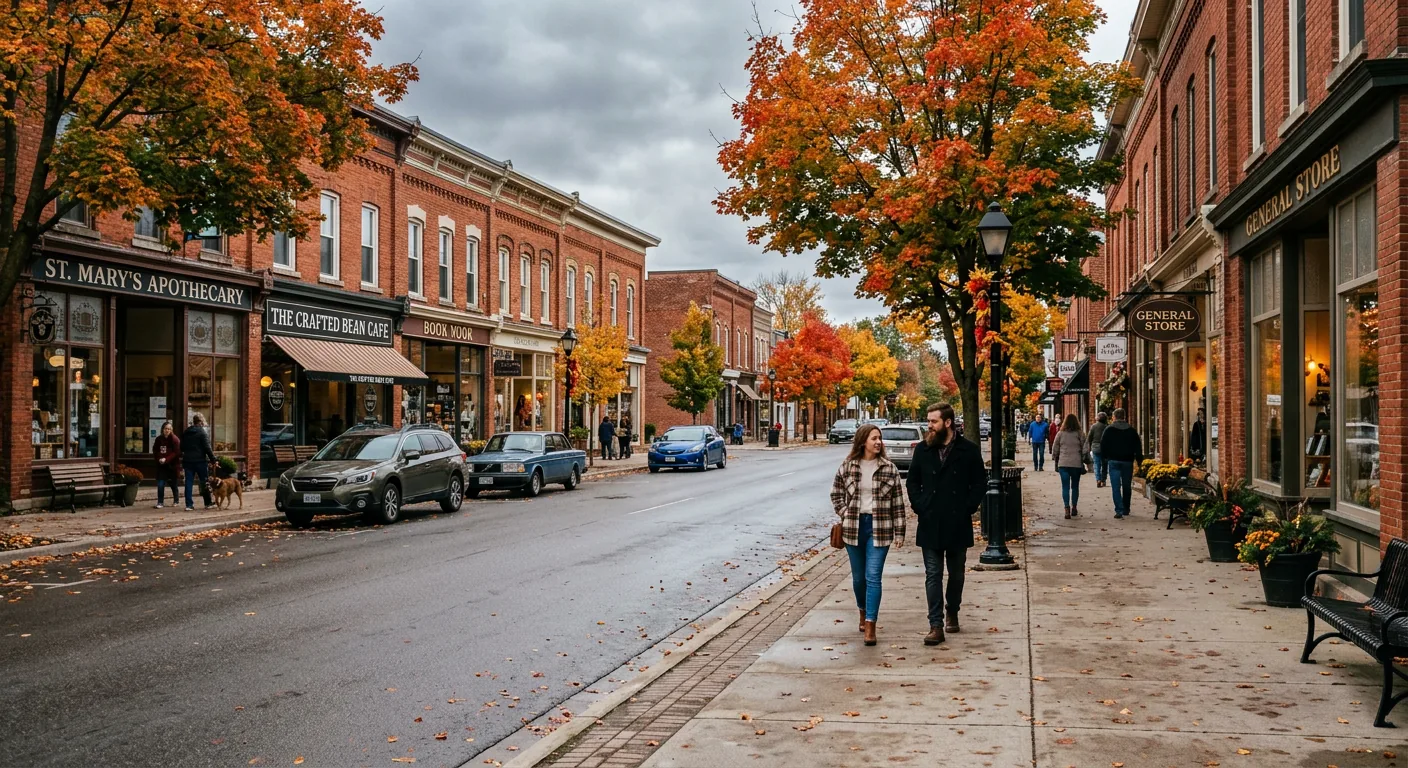
Downtown Collingwood draws families, retirees, and professionals who want to walk to restaurants, the library, and the waterfront. Properties here tend to hold value well and attract a range of buyers.
Shipyards is a newer development directly on Georgian Bay, with waterfront access and modern construction. Prices are higher, and the mix includes condos, townhomes, and detached homes.
Mountaincroft and Georgian Meadows offer more traditional subdivision housing — detached homes, garage access, family-oriented streets. These tend to offer better value per square foot than the waterfront-adjacent districts.
Thornbury (technically in the Township of The Blue Mountains) is a 15-minute drive from Collingwood's core. It's quieter, boutique, and increasingly popular with buyers who want Georgian Bay proximity without the Collingwood pricing.
Blue Mountains includes ski-adjacent properties, resort condos, and recreational real estate. Entry prices can be lower in some segments, but condo fees and short-term rental regulations vary significantly by development.
Each of these micro-markets behaves differently depending on the time of year, property type, and buyer pool. An agent who knows all of them is a material advantage.
For the full breakdown, read our neighbourhood guide.

The Ontario Home Buying Process, Step by Step
Ontario updated its real estate rules significantly with TRESA (Trust in Real Estate Services Act), which replaced the older REBBA framework. Here's what the process looks like in 2026.
1. Assess Your Financial Readiness
Before any showings, know your numbers:
- Credit score (aim for 680+; 720+ for better mortgage rates)
- Stable employment and income documentation
- Savings: down payment + closing costs + reserves
2. Open or Maximize FHSA
If you're a first-time buyer, the First Home Savings Account (FHSA) is the most powerful tool available. You can contribute up to $8,000/year, $40,000 lifetime. Contributions are tax-deductible, and withdrawals for a qualifying home purchase are tax-free. If you haven't opened one, open it now — even if you're 12-18 months from buying, every year of contributions counts.
3. Get Pre-Approved (Not Just Pre-Qualified)
Pre-approval means a lender has actually reviewed your financials and committed to a rate hold. This matters in Collingwood because move-in-ready properties in sought-after neighbourhoods still move quickly. An offer conditional on financing from a pre-approved buyer is materially stronger than one from someone with a verbal estimate.
4. Select a RECO-Licensed Local Agent
Under TRESA, buyers choose between designated representation (the agent advocates for you specifically) and customer service (more neutral, transactional). Most buyers working with an independent agent will want designated representation — make sure you understand what you're signing before any showings.
Collingwood's micro-markets are specific enough that an agent who primarily operates in Barrie or Toronto may miss nuance that affects your offer strategy and what you pay.
5. Search, View, and Evaluate
With pre-approval confirmed and an agent on board, active search begins. In Collingwood's 2026 market, don't feel pressure to offer the same day you view. That era has passed for most property types. Use the conditional period to your advantage.
6. Submit an Agreement of Purchase and Sale (APS)
The APS is your formal offer. In Ontario, it will typically include conditions for:
- Financing confirmation (5-10 business days)
- Home inspection (particularly important for older homes, waterfront properties, and anything with a well or septic system)
- Status certificate review (mandatory for condos — gives you 10 days to review the condo corporation's finances)
7. Close With a Real Estate Lawyer
Ontario requires a lawyer for closing. Budget for their fees ($1,500-$2,500 typical) and factor in the lawyer's role in title search, title insurance, and transfer registration.
First-Time Buyer Programs Available in 2026
Collingwood is not in the Toronto Census Metropolitan Area, which means no municipal land transfer tax — only the provincial one applies. That alone is significant.
Ontario Land Transfer Tax Rebate
First-time buyers in Ontario receive a rebate of up to $4,000 on provincial land transfer tax. If your purchase price is $368,000 or less, the rebate covers the full amount. For higher prices (including most Collingwood properties), it reduces but doesn't eliminate the tax.
First Home Savings Account (FHSA)
As noted above: $8,000/year, $40,000 lifetime, fully tax-deductible contributions, tax-free qualifying withdrawals. The gold standard of Canadian first-time buyer programs.
RRSP Home Buyers' Plan (HBP)
Withdraw up to $35,000 from your RRSP tax-free ($70,000 per couple) for a qualifying home purchase. You repay the amount over 15 years or include it as income. Works well combined with FHSA.
First-Time Home Buyer Tax Credit
A federal non-refundable tax credit worth up to $1,500 on the year of purchase. Minor in the context of a $767,000 transaction, but worth claiming.
What Are Closing Costs When Buying in Collingwood?
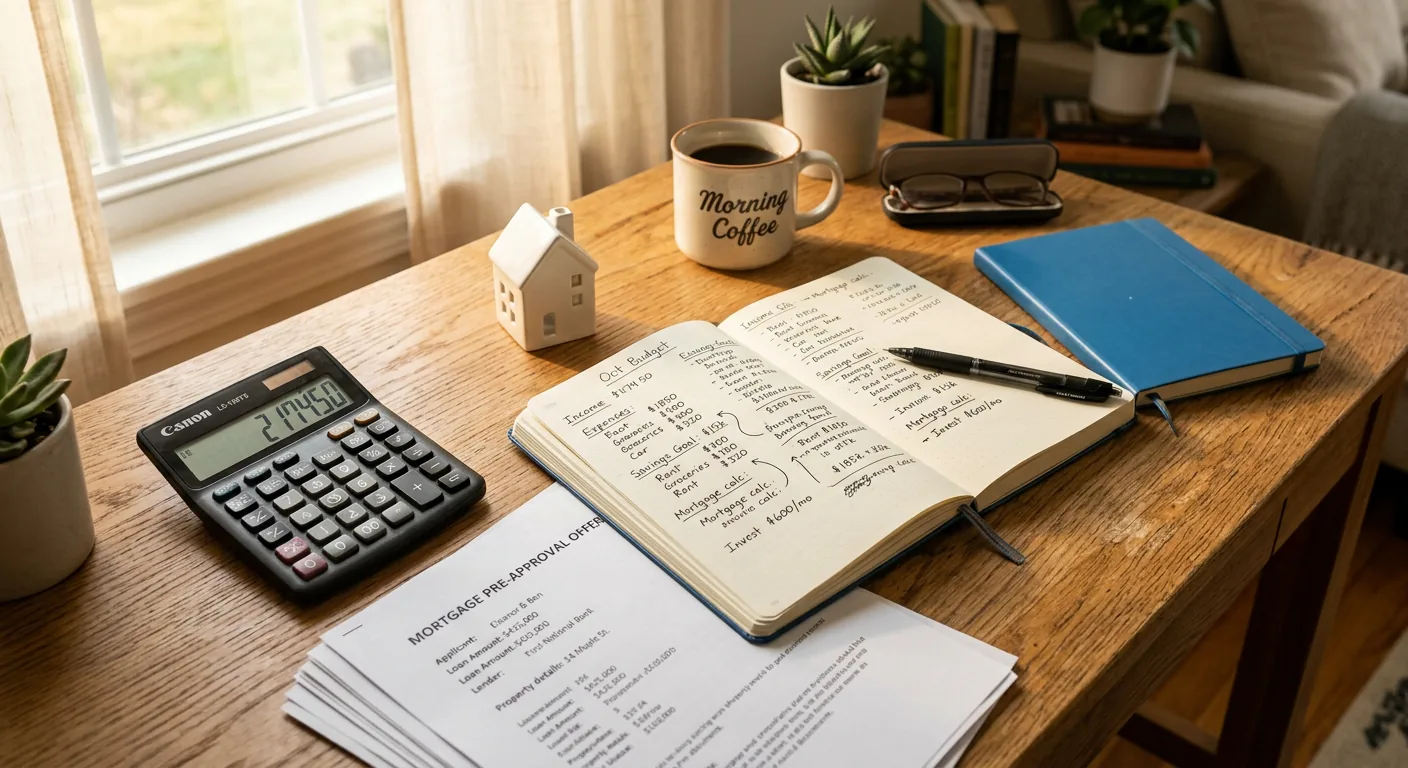
Budget 2–4% of the purchase price for closing costs. On a $767,000 purchase, that's roughly $15,000–$30,000 on top of your down payment. The main components:
| Cost Item | Estimated Range |
|---|---|
| Provincial Land Transfer Tax | ~$11,370 (on $767K) |
| Ontario LTT Rebate (first-time) | –$4,000 |
| Title Insurance | $300–$500 |
| Real Estate Lawyer | $1,500–$2,500 |
| Home Inspection | $400–$600 |
| Disbursements & Registration Fees | $500–$1,000 |
| Moving Costs | $1,500–$5,000+ |
| Total (estimate) | $11,600–$17,000 (after rebate) |
Note: HST applies to new construction only, not resale properties. If you're buying a brand-new build, factor that in separately — it's a significant additional cost.
Common Mistakes Buyers Make in Collingwood
These come up repeatedly enough that they're worth naming directly.
Buying in ski season without comparing spring prices. January through March is peak competition in Collingwood. Buyers who can wait until April or May often get better negotiating room on the same properties.
Skipping the home inspection. Older homes, properties near water, and anything with a well or septic system carry inspection risks that aren't visible during a showing. A $500 inspection that reveals a $30,000 septic issue is one of the best investments you'll make.
Underestimating closing costs. The down payment gets all the attention, but closing costs are real and can surprise buyers who haven't planned for them.
Confusing waterfront with waterfront access. Collingwood has properties that sit directly on Georgian Bay and properties that have deeded or shared access to water. The price difference is substantial; so is the experience.
Not vetting condo documents. Resort condo developments in and around Blue Mountain can carry maintenance fees of $700–$1,200/month. The status certificate review period (10 days) exists for a reason — use it.
Choosing an agent who doesn't know the micro-markets. Mountaincroft and Shipyards behave differently. Thornbury and downtown Collingwood behave differently. An agent who knows which micro-market fits your budget and timeline is a genuine strategic advantage, not a commodity.
When Is the Best Time of Year to Buy in Collingwood?
The Collingwood market has a distinct seasonal rhythm that most Ontario towns don't share.
Ski season (December–March): Highest competition. GTA buyers are visiting, touring, and making offers while they're already up. If you buy now, you're competing with the most motivated recreational buyers of the year.
Spring (April–May): More listings come to market, and competition from ski-season buyers has subsided. Often the best window for buyers who can be patient.
Summer: Moderate. Inventory tends to be available, and motivated sellers who didn't move their property in spring are open to negotiation.
Fall (September–October): A second wave of activity before winter. Good for buyers who want to be settled before ski season.
For most buyers who aren't tied to a specific timeline, late spring is the strategic sweet spot.
How Real Estate Ready Changes the Buying Experience
The standard process puts buyers in a reactive position: wait for listings, compete with other offers, hope the timing works out. Real Estate Ready inverts that.
On realestateready.ca, you create a private buyer profile — your target neighbourhood, budget range, property type, and timeline. That profile is shared with RECO-licensed local agents who can actually match your criteria. You control what you share and when.
The result: agents come to you with matched opportunities, sometimes before a property is publicly listed. No cold calls. No pressure. You stay anonymous until you choose to engage.
It's a better starting point for buyers who know what they want but don't want to wade through the noise to find it. See how it works or go straight to registering your buyer profile.

Buying a Home in Collingwood: Action Checklist
Use this before you make any offers:
- Check and confirm credit score (680+ minimum, 720+ preferred)
- Open FHSA if eligible and begin contributing
- Calculate available RRSP HBP funds
- Get formal mortgage pre-approval (not just pre-qualification)
- Define target neighbourhoods and property type
- Identify a RECO-licensed agent with Collingwood micro-market experience
- Understand TRESA representation options before signing anything
- Budget 2–4% of purchase price for closing costs
- Plan inspection for any offer, especially waterfront and older properties
- Request and review status certificate before finalizing any condo purchase
- Confirm short-term rental zoning if investment income is part of the plan
- Engage a real estate lawyer early
Frequently Asked Questions
What is the average home price in Collingwood Ontario in 2026?
The average sold price in Collingwood is approximately $767,093 as of February 2026. That figure is down about 2.9% from earlier in the year but up 6.5% year-over-year, reflecting a market that has moderated from pandemic peaks while still trending positive over the medium term.
Is Collingwood a good place to buy a home?
Yes, for buyers who want to use the property. Collingwood offers four-season recreation, a walkable downtown, roughly 90-minute access to Toronto, and home prices that are significantly lower than comparable GTA markets. The 10-year appreciation of over 225% reflects genuine demand rather than speculative froth.
How much do I need for a down payment in Collingwood?
Minimum down payment in Canada is 5% on the first $500,000 and 10% on amounts between $500,000 and $999,999. On a $767,000 home, that's $25,000 on the first $500K plus $26,700 on the remaining $267K — roughly $51,700 minimum. Most buyers in this price range put down more to reduce CMHC mortgage insurance premiums.
What first-time home buyer programs are available in Ontario?
The main programs are: the First Home Savings Account (FHSA — $8,000/year, $40,000 lifetime, tax-deductible contributions and tax-free withdrawals), the RRSP Home Buyers' Plan (up to $35,000 per person, $70,000 per couple), the Ontario Land Transfer Tax Rebate (up to $4,000), and the First-Time Home Buyer Tax Credit (up to $1,500 federal credit).
How long does it take to buy a home in Ontario?
From signed representation agreement to closing, typical timelines range from 30 to 90 days. The conditional period (financing and inspection) usually runs 5–10 business days. Closing dates are negotiable and typically set 30–60 days from the accepted offer.
What are closing costs when buying a home in Collingwood?
Plan for 2–4% of the purchase price. That covers provincial land transfer tax (minus the first-time buyer rebate if applicable), title insurance, lawyer fees, home inspection, and disbursements. On a $767,000 purchase, expect $11,000–$17,000 in closing costs after the rebate.
Do I need a local real estate agent to buy in Collingwood?
You're not legally required to have an agent, but given Collingwood's micro-market dynamics — seasonal pricing, waterfront distinctions, condo corporation variance, and neighbourhood-specific demand — working with a local RECO-licensed agent with specific Collingwood experience is a material strategic advantage, not a formality.
When is the best time of year to buy in Collingwood?
Late spring (April to May) is typically the best window for buyers. Competition from ski-season buyers has eased, more listings are entering the market, and motivated sellers who didn't move in winter are open to negotiation. Summer and early fall are also viable. Ski season (January–March) is the highest-competition period.
What's the difference between Collingwood and Blue Mountains real estate?
Blue Mountains (including the Town of The Blue Mountains) is a separate municipality adjacent to Collingwood. It includes Blue Mountain Village, resort condos, and ski-adjacent properties. Prices vary by development; resort condos often carry high maintenance fees and are subject to short-term rental zoning rules. Collingwood proper tends to offer more traditional residential neighbourhoods. Both markets attract GTA buyers, but for different use cases.
Can I use my FHSA or RRSP HBP to buy in Collingwood?
Yes. Both programs apply to qualifying home purchases anywhere in Canada, including Collingwood. FHSA withdrawals are tax-free on a qualifying first purchase. RRSP HBP withdrawals of up to $35,000 per person ($70,000 per couple) are also tax-free, with repayment over 15 years. You can use both programs together on the same purchase.
Ready to Start Your Collingwood Search?
You've done the research. Now you need a process that matches your timeline and keeps you in control.
Real Estate Ready is a demand-first buyer marketplace built specifically for the Collingwood market. You create a private profile — your target area, budget, and what you're looking for — and RECO-licensed local agents come to you with matched properties. No pressure. No unsolicited contact. You stay anonymous until you choose to connect.
Register your buyer wishlist at realestateready.ca and get matched with agents who are working Collingwood's inventory now.
Get your free Collingwood match report
Best-fit neighbourhoods, budget reality, and next steps — tailored to where and how you want to live.